

By Abbas Nazil
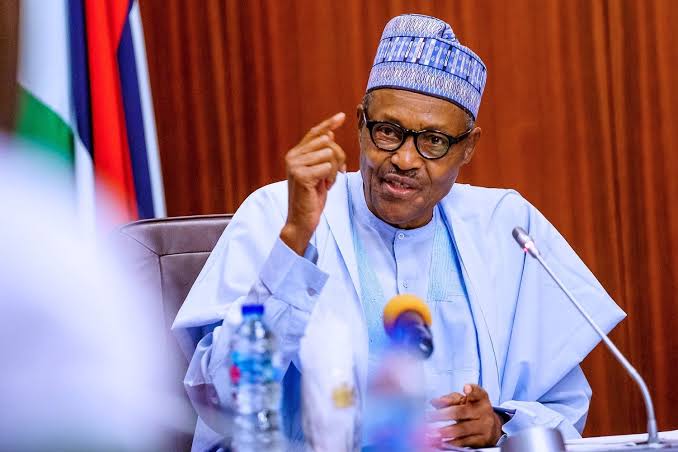
The death of former Nigeria’s President, Muhammadu Buhari, on Sunday, July 14, has been trailed by a potpourri of commentaries on the policies initiated by his government.
Buhari, who was a two-term President of Nigeria for eight years from May 2015 to May 2023, served as Nigeria’s military Head of State from December 1983 to August 1985.
Following the state burial accorded the late President Buhari, who died at 84 years, and the renaming of University of Maiduguri after him, the public has been curious to know about the Buhari legacies that warranted President Bola Ahmed Tinubu to deploy so much machinery of government to honouring his predecessor.
In this special report, NatureNews, Africa’s foremost authoritative independent newspaper on environment and climate change, highlights the legacies of the late former Muhammadu Buhari in the environment.
NatureNews notes that four ministers who served in Nigeria’s Ministry of Environment during President Buhari’s eight-year administration were Mrs. Amina Mohammed (currently Deputy Secretary-General of the United Nations); Alhaji Ibrahim Usman Jibril (now the 12th Emir of Nasarawa), Barrister Sharon Ikeazor, and Barrister Mohammed H. Abdullahi.
Climate Change Act and Net‑Zero Commitment
One of the most significant legacies of President Muhammadu Buhari is the Climate Change Act, which he signed in November 2021.
The act formally established the National Climate Change Action Plan, a legally enforceable five‑year carbon budget, with precise annual emission targets. the It also set up the institutional architecture of the National Council on Climate Change (NCCC) alongside the new Climate Change Fund (CCF).
At the COP26 in Glasgow, the same month, Buhari declared Nigeria’s solemn commitment to achieving net‑zero greenhouse gas emissions by 2060, a pledge grounded in Nigeria’s quest for climate justice.
In a tone that reverberated around the world, Buhari declared: “Africa and other developing nations produce only a small proportion of greenhouse gas emissions… yet we are the hardest hit.. we are, in effect, literally paying the price for policies that others pursue.”
UN Secretary-General António Guterres, in response to Buhari’s climate leadership, underscored the importance of global solidarity: “We need all hands on deck for faster, bolder climate action…”
Similarly, UN Environment Programme officials welcomed Nigeria’s maiden climate legislation as a historic move, noting that the country’s legal framework now enables structured climate governance and implementation of mitigation and adaptation efforts across sectors.
To give effect to the act, the NCCC was inaugurated in 2022 and charged with orchestrating strategy execution and ensuring accountability in Nigeria’s overall climate governance.
Experts and environmental stakeholders were enthused by the Act regarded as first of its kind in West Africa, which creates enforceable carbon caps and enables climate finance flows to support transformation.
Environmental justice advocates lauded Buhari’s net‑zero pledge, seeing it as evidence of Nigeria refusing to repeat the mistakes of industrialized nations. Buhari himself alluted to this when he said: “At COP26… I did say that Nigeria was not asking for permission to make the same mistakes that others have made in creating the climate emergency.”
Analysts had expressed concerns over the challenges of implementation, which was typical in the circumstances.
They pointed at key areas such as the publication of carbon budgets and full capitalisation of the Climate Change Fund after being operational.
Much was also expected from the NCCC, which is the highest climate governance body in Nigeria, in terms of providing overall direction and coordination of interministerial climate actions.
Notwithstanding the highlighted grey areas, environment stakeholders unanimously agreed that the Act provides a robust foundation that future administrations could build on.
The Buhari climate change act is an indelible environmental legacy for climate governance consisting of a binding law, an institutional mechanism, and a planet‐wide pledge, duly recognition by the UN and civil society stakeholders.
Energy Transition Plan and Great Green Wall Leadership
In August 2022, building on the momentum of Nigeria’s Net-Zero pledge, the Buhari administration unveiled its comprehensive Energy Transition Plan (ETP), a strategic blueprint aiming for universal energy access by 2030 and a zero‑carbon economy by 2060.
The ETP blueprint covered decarbonization across power generation, transport, clean cooking, industrial electrification, and investment in gas infrastructure as a transition fuel.
Simultaneously, Nigeria scaled up its involvement in the Great Green Wall (GGW) initiative, an African Union flagship program to restore degraded drylands across the Sahel.
Under Buhari, Nigeria planted millions of trees, planted over 9 million seedlings, restored nearly 4,800 hectares of arable land, and developed more than 1,300 km of shelterbelt forest corridors across northern states.
At COP27 in Sharm el‑Sheikh, Egypt, in 2022, Amina Mohammed, UN Deputy Secretary‑General, perhaps had Nigeria’s leadership in mind when she said:
“If we succeed here, it will demonstrate that degraded environments can be restored…” reflecting the worldwide implications of Nigeria’s bold initiatives.
The plan has since attracted endorsement from UN development agencies and climate finance bodies, highlighting Nigeria as an example of a country using policy tools to align energy access with climate ambition. It also underscores a climate‑resilient recovery vision, promoting clean energy while addressing energy poverty.
Although the initiative was historic, effective transition requires huge investment flows to renewable energy and gas projects. Yet, the transition plans have sparked debate over methane emissions, underlining the challenge of phasing out gas flaring in oil‑producing regions while building clean energy capacity.
Progress on Ogoni Cleanup
The Ogoni Cleanup under Buhari moved beyond rhetoric into measurable environmental remediation.
By early 2023, 63 sites across the four local government areas in Ogoniland had been remediated to international standards, based on the recommendations of the UNEP 2011 report.
The Hydrocarbon Pollution Remediation Project (HYPREP), launched under Buhari’s administration in 2016, marked Nigeria’s first ever push to implement the UNEP’s 2011 report on Ogoniland, recommending a $1 billion restoration programme and an expected remediation time‑frame of 30 years.
UNEP’s Executive Director Achim Steiner stated: “The people of Ogoniland have paid a high price… I am hopeful that cooperation… will result in environmental restoration…”.
However, due to issues such as tardiness in project takeoff, the then Minister of State, Barrister Sharon Ikeazor, wielded the big stick on HYPREP’s management, which also affected the Ministry’s leadership.
While Buhari’s government formally launched the Ogoni remediation effort and delivered some water infrastructure, UN agencies and rights groups contend that systemic issues inhibited the speedy implementation of what was meant to be a flagship environmental recovery initiative.
These initiatives includes Provision of potable water supply projects in 13 Ogoni communities, Establishment of the Centre of Excellence for Environmental Restoration in Ogoniland, Commencement of livelihood training programmes for over 1,200 youth and Construction of HYPREP’s Integrated Contaminated Soil Management Centre.
Despite delays and criticisms over bureaucratic inefficiencies and leadership changes at HYPREP, these milestones marked Nigeria’s first tangible federal action to address the oil-induced ecocide in the Niger Delta.
ACReSAL and Biodiversity Conservation: Strategy Meets Execution
Under Buhari, Nigeria launched the Agro‑Climatic Resilience in Semi‑Arid Landscapes (ACReSAL) programme in 2022–2023, targeting restoration and resilience across all 19 northern states.
The initiative aims to reclaim degraded land, establish climate‑adaptive agriculture, and support local livelihoods while combating desertification.
Reports from primary data sources highlight that by the time President Buhari handed over in May 2023, the Agro-Climatic Resilience in Semi-Arid Landscapes (ACReSAL) project had restored over 108,000 hectares of degraded land across northern Nigeria.
Other key achievements are the development of integrated watershed plans in 19 northern states, Engagement of over 120,000 households in climate-smart agriculture, Capacity building for more than 10,000 forestry and extension workers and Installation of solar-powered irrigation and agro-processing equipment in pilot communities.
At regional forums, Nigeria’s environmental leadership through ACReSAL drew praise from UN technical partners as a model for integrating climate resilience with rural development.
Simultaneously, Buhari’s administration updated Nigeria’s National Forest Policy and launched a REDD+ strategy, setting aggressive targets to increase forest cover from approximately 6% to 25% by 2030 and reduce forest-sector emissions by 20% by 2050.
These policies underscored the conservation of biodiversity corridors and wetlands in states such as Cross River, Ogun, Edo, Kaduna, Plateau, and Nasarawa.
Barrister Mohammed Hassan Abdullahi, minister from April 2022 to May 2023, told delegates at COP27:
“I represented Nigeria’s launch pad in international climate diplomacy, ensuring our Climate Act and ETP are not just policies but practical pathways.”
He emphasised that ACReSAL and forest restoration were central to Nigeria’s climate justice narrative and continental environmental diplomacy.
Though performance varies at subnational levels, observers note remarkable success stories: watershed regeneration in Bauchi, community‑led tree planting in Yobe, and seed‑bank programmes in Kano, among others.
Therefore, Nigeria’s combined push on ACReSAL, REDD+, and institutional reform under the Climate Act marks a first major nod toward biodiversity protection across diverse ecosystems—from dryland resilience in the north to forest reclamation in the south.
Baton bearers in Reflection
President Muhammadu Buhari, in a UN General Assembly address, framed Nigeria’s climate ambition within global equity: “As part of Nigeria’s efforts at achieving our Global Net‑zero aspiration, the current Administration last year adopted a National Climate Change Strategy”.
In the same vein, Amina Mohammed, Buhari’s first Minister of Environment emphasised early groundwork: “Laying the foundation, Ogoni cleanup, green bonds, the Great Green Wall, was vital to give this vision roots.”
Sharon Ikeazor, appointed Minister of State in 2019, spearheaded mid‑phase reform attempts in HYPREP and advocated stronger oversight and collaboration across agencies before being redeployed.
Finally, Barrister Mohammed Abdullahi, as Environment Minister (April 2022 – May 2023), crystallized Nigeria’s bold strides in climate actions and diplomacy. Speaking at COP27, he reiterated: “Our Climate Act and ETP are not just policies but practical pathways,” as he affirmed ACReSAL’s role in actualizing Buhari’s vision.
Invariably, the eight years of Buhari’s administration showed how each Minister of Environment carried a baton in climate action performance – from foundational policy through implementation challenges to international projection and legacy initiatives – reflecting both ambition and the tension of governance realities.
Verdict of History
President Buhari’s environmental stewardship brought Nigeria unprecedented legal commitment, continentals climate action inspiration, and international engagement.
The visible legacies, including the Climate Change Act, Net‑Zero pledge, Energy Transition Plan, Great Green Wall, ACReSAL, and REDD+/forest policies together form a coherent architecture for a greener nation and sustainable future.
Stakeholders expect the Bola Ahmed Tinubu administration to sustain the streaks of initiatives with regards to Ogoni cleanup, energy transition, reforestation, ecological mitigation, agro-climatic land resilience, net-zero target actualisation and strengthening the NCCC, among others.
Clearly, Nigeria has established a grand blueprint: a legal and policy foundation that, if properly sustained and reformed, can elevate the country as a climate action leader across Africa.
Buhari’s environmental legacy is thus one of historic initiatives, bold design, challenging execution, firm potential, and solid foundation.
Abbas Nazil, who holds a first class in forestry and wildlife management, is a reporter with NatureNews
