

By Faridat Salifu
Sub-Saharan Africa faces a dual challenge: feeding a rapidly growing population while protecting its forests.
Between 2001 and 2023, the region lost 72 million hectares of forest an area roughly the size of Kenya primarily due to agricultural expansion.
Experts say the root cause is persistently low crop yields, which are about half of India’s and a fifth of the United States’ per hectare.
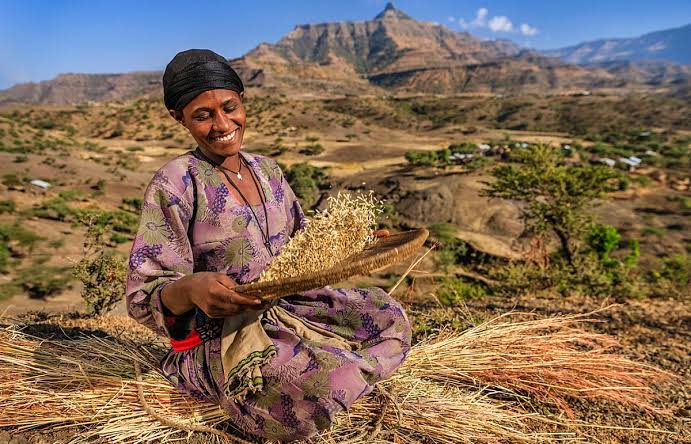
To reverse this trend, smallholder farmers must be empowered to grow more food on the land they already cultivate.
This requires a strong alliance between African farmers, researchers, environmentalists, and development champions to demand greater investment in agricultural research.
Innovations such as AI-driven development of disease-resistant bananas, maize tolerant to lethal necrosis, and sorghum resilient to parasitic plants demonstrate the potential of modern science to transform African agriculture.
Despite pledges such as the 2003 Maputo Declaration and the vision of an African Green Revolution, most African governments still invest less than 1% of their agricultural GDP in research far below the 2 percent benchmark set by China and South Korea.
Only a handful of countries consistently meet the target, leaving critical opportunities for high-nutrition, climate-smart, and locally adapted seeds largely untapped.
Investing in agricultural research has proven economic returns: studies show up to $200 gained for every $1 invested.
Moreover, increasing yields sustainably can reduce pressure on forests, protect biodiversity, and help Africa meet its nutritional needs.
Experts emphasize that when conservationists, agricultural leaders, and policymakers speak with one voice, the continent’s agricultural transformation becomes achievable—and the forests stand a chance of survival.
