

By Faridat Salifu
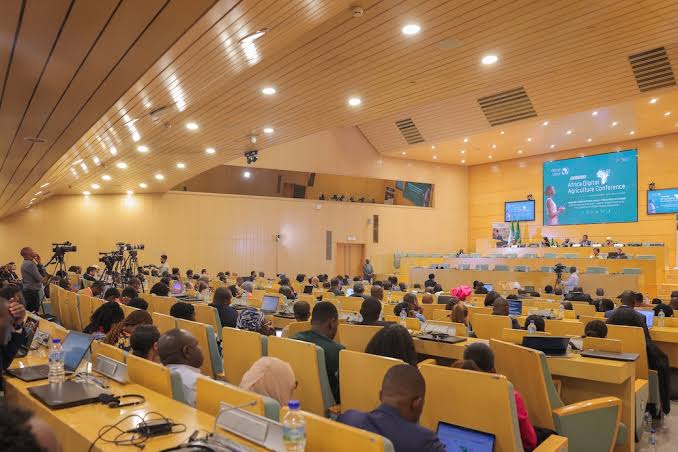
Africa has taken a major step toward modernising its food systems as the African Union (AU) wrapped up its maiden Digital Agriculture Conference (DAC), a three-day gathering held at AU Headquarters in Addis Ababa.
Rather than focusing solely on policy declarations, this year’s conference spotlighted how digital tools are already reshaping the continent’s farming landscape, from mobile advisory platforms to satellite-guided crop monitoring, and how these technologies can be scaled to strengthen food security amid climate pressures.
The meeting brought together innovators, ministers, development finance institutions, and researchers to examine practical pathways for building climate-smart, tech-enabled agricultural systems that can serve a rapidly growing population.
Representing the AU Commission Chairperson, Deputy Chairperson Amb. Selma Malika Haddadi, said Africa must shift from traditional farming models to data-driven agriculture capable of supporting inclusive growth. She noted that technology will determine the continent’s competitiveness and its ability to keep millions fed.
Similarly, Commissioner for Agriculture, Rural Development, Blue Economy and Sustainable Environment, Moses Vilakati, stressed that digital agriculture is no longer an optional innovation but a central pillar for meeting Africa’s food needs.
He reaffirmed the AU’s target under the Kampala CAADP Declaration—that 45 percent of the food Africa consumes should be produced within the continent by 2030—arguing that digital transformation will be essential to achieving that goal.
The conference reviewed ongoing AU frameworks such as the Digital Transformation Strategy (2020–2030) and the Digital Agriculture Strategy 2023–2030, tying them to efforts aimed at boosting productivity, supporting agribusinesses, and improving rural livelihoods.
At its close, the gathering issued a renewed commitment to deepen investments in agri-tech, expand digital infrastructure, and support farmers—especially women and youth—to adopt tools that enhance yields, reduce losses, and build resilience to climate shocks.
