

By Abbas Nazil
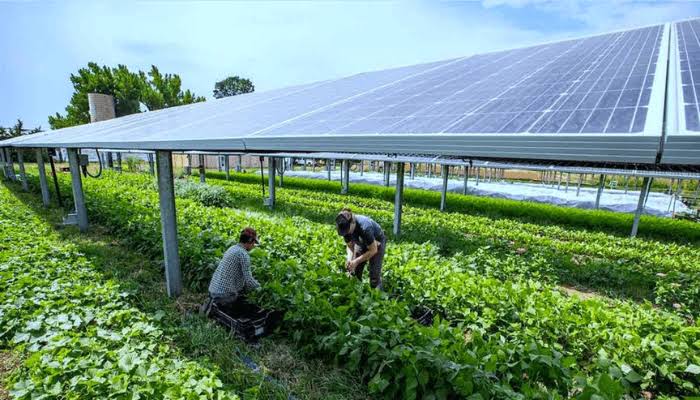
Olds College officials are promoting agrivoltaics as a practical and profitable way for farmers and ranchers to grow crops or raise livestock while generating solar energy on the same land.
The concept took centre stage during a one-day caucus on June 26 at the college’s Alumni Centre, which drew about 60 participants including academics, agricultural producers, politicians, and representatives from Agrivoltaics Canada.
Ike Edeogu, applied research manager at Olds College, said the discussions focused on regulatory requirements, from small-scale energy production to large-scale projects that demand environmental assessments or feasibility studies.
He stressed the need for research to provide answers that benefit both solar energy developers and agricultural producers, noting that agrivoltaics is already being practised in countries like Israel.
Edeogu pointed out that farmers do not need to lease land exclusively for solar installations.
They can integrate them with agricultural activities such as grazing sheep, growing cereals, oilseeds like canola, and pulses such as soybeans, possibly in rotational systems that combine energy and food production.
Examples were presented of farmers in Alberta and the United States who increased profitability through agrivoltaics.
Edeogu emphasised the importance of Canadian-specific research, noting that much of the current academic reference material comes from Europe or other regions.
He suggested creating an Alberta chapter of Agrivoltaics Canada to lead research, raise public awareness, and lobby the provincial government for supportive policies.
One promotional idea discussed was setting up an agrivoltaics display at the Calgary Stampede next year.
Research associate Semeton Amosu, who works on Edeogu’s team and helped organise the caucus, said there is a pressing need to publicise the benefits of agrivoltaics.
He argued that the relationship between solar energy and agriculture should be seen as complementary, not competitive, describing it as a dual use of land that can be profitable.
Amosu highlighted policy discussions aimed at making it easier for both solar operators and producers to adopt the practice.
This aligns with a 2024 provincial policy that restricts projects on prime farmland unless they can prove compatibility with crops or livestock.
Olds College is already engaged in research projects and partnerships with solar operators keen to adopt agrivoltaics, with several proposals under review.
Amosu noted that producers may need to adapt, possibly using smaller machinery to work around panels, and said the caucus presented five or six different research models ranging from crops and livestock to biodiversity-focused systems.
He even suggested beekeeping as a viable agrivoltaic practice, stressing that environmental sustainability, soil health, and climate considerations are essential.
He added that agrivoltaics could also create employment opportunities as land under such systems still requires active management.
