

By Abdullahi Lukman
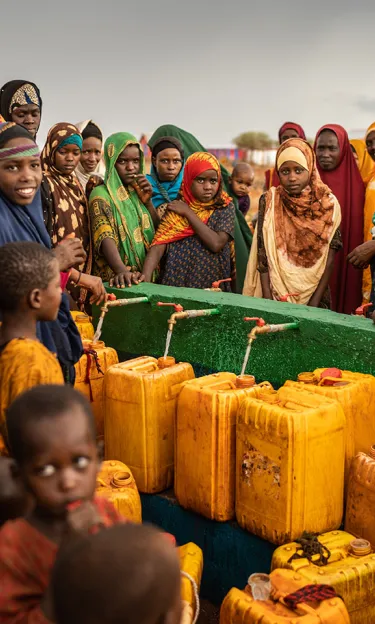
Gender inequality continues to undermine global water security, with women and girls bearing the greatest burden of water collection, according to a new report presented during a World Water Day event in Santiago.
The report, Water for All: Equal Rights and Opportunities, was unveiled by Esther Kuisch Laroche of UNESCO.
It highlights that women account for over 70 percent of water collection in rural households without supply, limiting their access to education and economic opportunities while exposing them to risks, including gender-based violence.
Findings show that women and girls collectively spend about 250 million hours daily collecting water worldwide, with girls under 15 more likely than boys to perform the task.
The report also notes that inadequate sanitation has disrupted education and work, with millions of adolescents missing school and essential activities due to lack of proper hygiene facilities.
Despite their central role in water provision, women remain underrepresented in water governance and services.
Data from 64 companies across 28 countries indicate that only one in five workers in the sector is female, and women are more likely to receive lower pay.
The report further links climate change to widening inequality, stating that rising temperatures disproportionately affect female-headed households, reducing income and increasing unpaid workloads.
Speaking at the event, Laroche stressed that improving water governance, expanding data availability, and adopting innovative solutions are essential to addressing growing challenges such as climate change and increasing demand for water.
The report calls for targeted reforms, including removing legal and financial barriers to women’s access to water and land, increasing gender-responsive financing, investing in data, recognising unpaid labour, and strengthening women’s leadership in water management.
The event, organised by CONAPHI with support from UNESCO, also featured expert discussions on water security, reuse, and desalination.
UN-Water, which produced the report, said it will continue to coordinate global efforts to advance gender equality in water and sanitation through collaboration, data sharing, and advocacy.
