

By Awyetu Asabe Hope
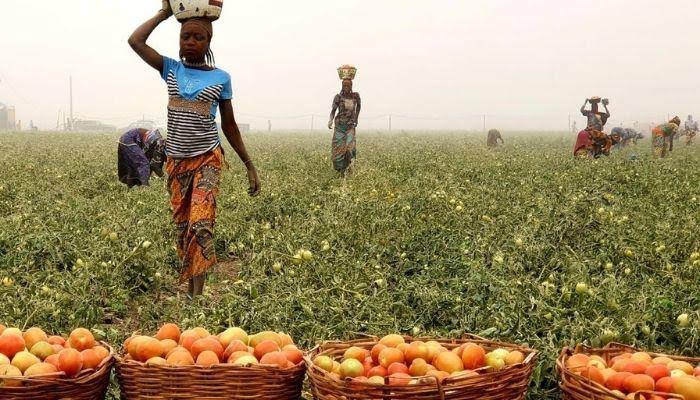
Tomato farmers in Borno State are counting heavy losses as tonnes of fresh produce rot across farms and markets, barely days after harvest, due to poor storage facilities, high transportation costs and the absence of processing industries.
Findings show that dry-season farmers around Alau Dam, Maiduguri and Jere have lost up to 50 percent or more of their harvest, with many saying five months of intensive labour were wiped out within 48 hours.
From irrigation fields to major markets, baskets of tomatoes harvested during the dry season are left to decay, triggering distress among farmers, many of whom relied on loans to finance production.
The farmers blame the losses on lack of cold chain infrastructure, poor road networks, market glut and the highly perishable nature of tomatoes, which have a shelf life of just two to three weeks.
Pest infestations, particularly Tuta absoluta, have further compounded the problem.
A farmer in Alau said transportation costs alone have made it impossible to move produce to distant markets before spoilage sets in.
“After spending months on irrigation, fertiliser and labour, we harvest in abundance but cannot sell. In less than two days, everything is destroyed,” he said.
Within Maiduguri metropolis, tomato growers said the problem is not transportation but lack of buyers and price crashes caused by oversupply. According to them, markets are flooded with tomatoes from surrounding communities, forcing prices to drop sharply.
“We bring our tomatoes to the market, but there are no buyers or any minimum support price. What we can’t sell ends up rotting,” another farmer said.
The situation has become a recurring challenge for vegetable farmers in the state, who say the absence of proper storage and preservation facilities continues to turn bumper harvests into losses.
Farmers are now calling on the federal and state governments to establish tomato processing and preservation industries in Borno to absorb excess produce, stabilise prices and reduce post-harvest losses.
They argue that processing plants would not only save their harvests but also create jobs and strengthen food security in the region.
Observations across affected farming communities show that the crisis has left many farmers financially distressed, with some struggling to repay loans taken to support dry-season farming.
Efforts to get a response from relevant government officials were unsuccessful as of the time of filing this report.
