

By Abbas Nazil
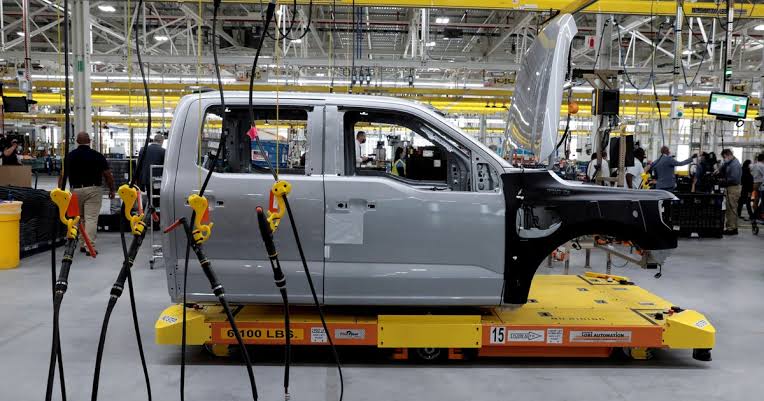
Nigeria has signed a landmark agreement with South Korea’s Asia Economic Development Committee to establish what is being described as Africa’s first full-scale electric vehicle manufacturing plant, marking a major step toward building a domestic EV industry and accelerating green technology adoption.
The deal was signed by Nigeria’s Minister of State for Industry, Senator John Enoh, and AEDC Chairman Yoon Suk-hun, in collaboration with the National Automotive Design and Development Council, aligning with the country’s National Energy Transition Plan and Automotive Industry Development Plan.
Officials said the project will include not only vehicle manufacturing but also the development of essential charging infrastructure across the country to support the widespread adoption of electric mobility.
Once fully operational, the factory is projected to produce up to 300,000 electric vehicles annually and generate around 10,000 direct jobs, strengthening Nigeria’s industrial base and reducing reliance on imported vehicles.
The initiative will be implemented in phases, beginning with vehicle assembly before expanding into full in-house manufacturing, allowing gradual capacity building and technology transfer.
Nigeria currently imports between 400,000 and 720,000 vehicles each year, with the vast majority being used cars, a trend that has contributed to high costs, environmental concerns and weak local automotive production.
In 2023 alone, vehicle imports reached about 700,000 units, while passenger car imports were valued at over one billion dollars in 2024, highlighting the scale of Nigeria’s dependence on foreign automobiles.
To support the transition toward electric mobility, the federal government launched a 20 billion naira consumer credit scheme in December 2024 to help Nigerians purchase locally assembled electric vehicles, motorcycles and tricycles.
The financing program partners with domestic manufacturers such as Innoson, PAN, Mikano, Nord and other firms in a bid to expand access, stimulate demand and strengthen the local EV ecosystem.
Previous electric vehicle initiatives in Nigeria, including partnerships with foreign firms in 2022 and 2025, remained largely pilot projects or limited assembly efforts that did not reach full industrial scale.
The new South Korea-backed plant is designed to go beyond those efforts by integrating manufacturing, assembly and nationwide charging networks into a single large-scale production framework.
Across Africa, electric vehicle adoption is increasing but remains minimal, with fewer than one percent of vehicle sales being electric as of mid-2025 and most EVs concentrated in motorcycles and commercial fleets.
Countries such as Ethiopia, Ghana, Morocco and South Africa currently lead the continent in EV usage, though infrastructure gaps and high costs continue to limit growth.
Nigeria’s move to host Africa’s first large-scale EV manufacturing facility signals its ambition to become a regional hub for electric mobility, reduce import dependence, create jobs and position its economy for a cleaner, technology-driven transport future.
