

By Abbas Nazil
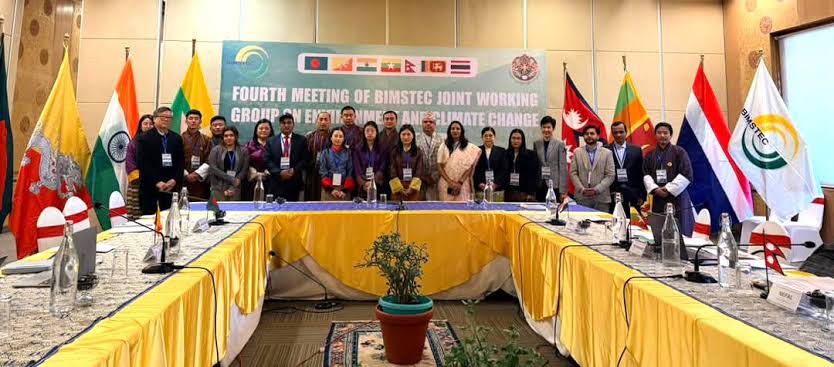
The fourth meeting of the BIMSTEC Joint Working Group on Environment and Climate Change concluded in Thimphu, Bhutan, underscoring the need for stronger regional cooperation to address escalating climate challenges.
The two-day meeting, held from January 15 to 16, brought together senior officials from all seven BIMSTEC member states to advance collective climate action.
Hosted by Bhutan, the lead country for the Environment and Climate Change sector, the gathering focused on policy coordination, institutional strengthening and climate finance mobilization.
Delegations from Bangladesh, Bhutan, India, Myanmar, Nepal, Sri Lanka and Thailand participated alongside officials from the BIMSTEC Secretariat.
The meeting emphasized that climate change poses growing risks to ecosystems, livelihoods and economic stability across the Bay of Bengal region.
Participants highlighted that rising temperatures, extreme weather events and sea-level rise are increasingly threatening both Himalayan and coastal communities.
A major outcome of the meeting was the finalization of the Terms of Reference for the Joint Working Group on Environment and Climate Change.
The agreed framework will guide future collaboration, decision-making processes and implementation of regional initiatives.
Delegates also reviewed progress under the BIMSTEC Plan of Action, assessing ongoing projects and identifying gaps that require urgent attention.
Climate finance emerged as a central theme throughout the discussions.
Member states examined ways to collectively mobilize, access and distribute financial resources to support mitigation and adaptation efforts.
Officials stressed that adequate and predictable climate funding is essential for implementing regional projects and building resilience.
The meeting recognized the importance of coordinated approaches to attract international climate funds and private sector investment.
Bangladesh played an active role in the deliberations, with its delegation led by S. M. Mahbubul Alam, Director General of the Ministry of Foreign Affairs.
Bangladesh’s participation was noted as particularly significant due to the country’s vulnerability to climate impacts such as cyclones, flooding and sea-level rise.
Experts observed that outcomes from the meeting could strengthen environmental security for nations located along the Bay of Bengal coastline.
They also noted the importance of protecting fragile mountain ecosystems in the Himalayan region, which influence water systems across South and Southeast Asia.
Participants agreed on the urgency of launching new regional initiatives to reduce climate risks and preserve biodiversity.
The meeting reaffirmed BIMSTEC’s commitment to sustainable development through shared responsibility and technical cooperation.
Officials emphasized that climate challenges transcend national borders and require unified regional responses.
The conclusion of the Thimphu meeting marked a step forward in aligning member states toward common environmental goals.
As climate pressures intensify, BIMSTEC leaders expressed confidence that enhanced collaboration would support long-term resilience and inclusive growth across the region.
