

By Abbas Nazil
Carbon Industries Group Ltd has signed two major climate cooperation agreements with the Government of Senegal, marking a significant step in the country’s growing participation in global carbon markets.
The Hong Kong–based carbon project developer said the agreements position it as an emerging player in Article 6 carbon credit mechanisms under the Paris Agreement.
The deals were announced on January 6, 2026, following formal engagements between the company and Senegalese authorities in Dakar.
Senegal has been strengthening its role in international carbon trading through bilateral arrangements with countries such as Switzerland, Singapore and Norway.
These frameworks require strict authorisation, transparent accounting and corresponding adjustments to avoid double counting of emissions reductions.
Under the new agreements, Carbon Industries Group will work directly with the Senegalese government to develop large-scale emissions reduction projects.
Carbon credits generated from the projects may be sold internationally, subject to verification, registry approval and issuance under Paris Agreement rules.
The first agreement focuses on restoring about 32,000 hectares of mangroves in partnership with Senegal’s marine protected area authorities.
The project is expected to generate blue carbon credits, which are increasingly valued for their role in nature-based climate solutions.
Analysts describe the mangrove restoration initiative as one of the largest blue carbon commitments announced in West Africa to date.
Based on standard sequestration assumptions over a 22-year crediting period, projected revenues could reach about 550 million dollars under conservative pricing.
In a stronger carbon market, revenues could rise to as much as 800 million dollars, subject to successful verification and sustained demand.
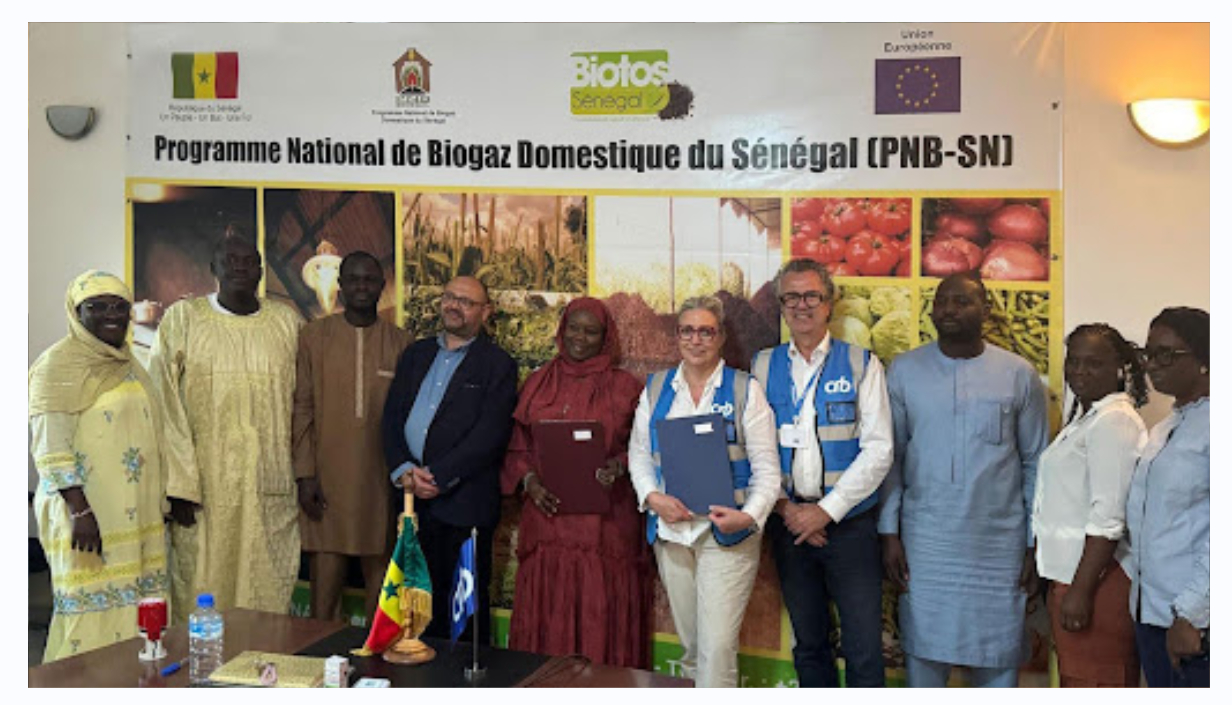
The second agreement involves Senegal’s National Domestic Biogas Programme operating under the Ministry of Energy.
The memorandum authorises the phased deployment of 27,000 household biodigesters over a ten-year period.
The programme has full institutional backing from the Senegalese government, providing a clear mandate for monitoring and reporting.
Under the arrangement, Senegal will retain a share of the carbon credits for national emissions reporting purposes.
Other authorised mitigation outcomes may be transferred internationally under Article 6.2 with corresponding adjustments.
Experts note that government-backed Article 6 credits often command a premium over voluntary credits due to higher integrity standards.
Across its lifespan, the biodigester project could generate around 80 million dollars conservatively, with upside potential of 190 million dollars.
The agreements come amid rising global demand for high-quality, government-authorised carbon credits.
Supply remains constrained by long development timelines, complex certification processes and limited scalable models.
Carbon Industries Group said early cooperation with Senegal positions it at the intersection of climate finance and public policy.
The company is led by chief executive Hilde Watty, who previously built and sold an international matchmaking firm in London.
Its expansion is supported by carbon market specialist Sam Warburton, a former senior executive at STX Group.
If both projects reach full issuance, the company could establish a multi-year revenue base exceeding 500 million dollars.
The agreements highlight Senegal’s rising profile in international carbon markets and underscore growing private sector interest in Africa’s climate potential.
