

By Abbas Nazil
Nigeria’s Senate has approved the Electric Vehicle Transition and Green Mobility Bill for a second reading, signaling the government’s renewed effort to accelerate the country’s shift from fuel-powered vehicles to electric mobility.
Sponsored by Senator Orji Uzor Kalu of Abia North, the bill aims to boost local electric vehicle (EV) production, promote adoption, and attract investment to Nigeria’s growing green mobility sector.
It also seeks to strengthen domestic participation by setting strict requirements for foreign automakers doing business in the country.
Under the proposed law, foreign automakers can only import, sell, or distribute electric vehicles through local partnerships.
They must also establish assembly plants within three years of operation in Nigeria and source at least 30% of their vehicle components locally by 2030.
Furthermore, the bill mandates that all local assemblers, manufacturers, importers, and sellers obtain licenses to operate.
To qualify, manufacturers must demonstrate the capacity to produce at least 5,000 electric vehicles annually.
Unlicensed operators face a fine of ₦500 million, while foreign automakers violating the bill’s requirements risk a ₦250 million penalty per non-compliance incident.
The bill also offers incentives such as waivers, subsidies, tax holidays, toll-free highway access, and exemptions from road taxes and emissions testing for EV owners.
However, the details of these incentives remain vague, raising concerns among industry stakeholders about their effectiveness.
The Federal Ministry of Industry, Trade, and Investment will coordinate the bill’s implementation, working alongside the Ministries of Transportation, Power, and Environment, as well as the Federal Inland Revenue Service.
Supporters of the bill believe it will encourage local production, create jobs, and lower EV costs by sourcing components domestically.
Ayodeji Audu, Founder and CEO of Reown, said the bill represents a positive step toward empowering local businesses and developing skilled technicians.
He noted that local sourcing could eventually make electric vehicles more affordable.
However, experts argue that Nigeria’s EV market is still too immature to meet the bill’s expectations.
An unnamed analyst told Techpoint Africa that demand for electric cars remains low, with the market largely limited to two-wheelers and tricycles.
He warned that forcing foreign automakers to set up assembly plants might not yield results without significant consumer demand.
Femi Oriowo, Co-founder and CEO of Carbin Africa, echoed this sentiment, stating that Nigeria’s market for brand-new vehicles is too small to sustain large-scale investments from foreign automakers.
Analysts also highlighted that while incentives such as tax breaks could attract investment, affordability remains the key to mass adoption.
Uche Ukonu Jnr, a stakeholder in the EV sector, stressed that Nigeria’s focus should be on making EVs accessible to ordinary citizens through financing and credit facilities.
He argued that without efforts to reduce the upfront cost of EVs, adoption will remain low despite incentives for manufacturers.
Comparisons with other African nations reveal that while countries like Kenya, Ghana, and Ethiopia have introduced incentives to stimulate EV adoption, challenges persist.
Ethiopia, for instance, banned fuel-powered vehicles in 2024 but continues to struggle with low EV sales due to high costs.
Experts warn that Nigeria could face a similar fate if it prioritises regulation over affordability and infrastructure.
Currently, Nigeria has an estimated 15,000 to 20,000 EVs — less than one percent of all vehicles — most of which are motorcycles and tricycles.
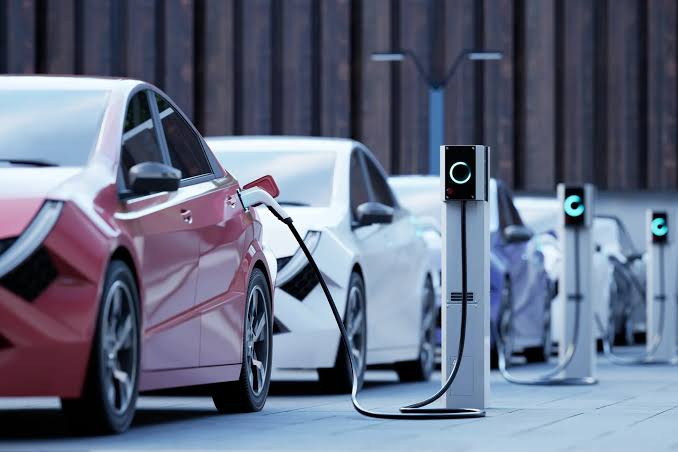
The bill also proposes that all fuel stations install EV charging points to support the transition.
Yet, stakeholders argue that Nigeria’s infrastructure challenges, particularly unstable electricity supply, remain a major barrier.
Ukonu emphasised that attracting foreign investors will depend less on penalties and more on providing stable power, reliable logistics, and supportive policy frameworks.
While the bill’s goal of fostering local EV manufacturing is commendable, experts insist that its success depends on creating a conducive investment environment and addressing infrastructural gaps.
If passed, the real test will be whether Nigeria can balance ambition with practicality to make electric mobility both sustainable and accessible to its citizens.
