

By Abbas Nazil
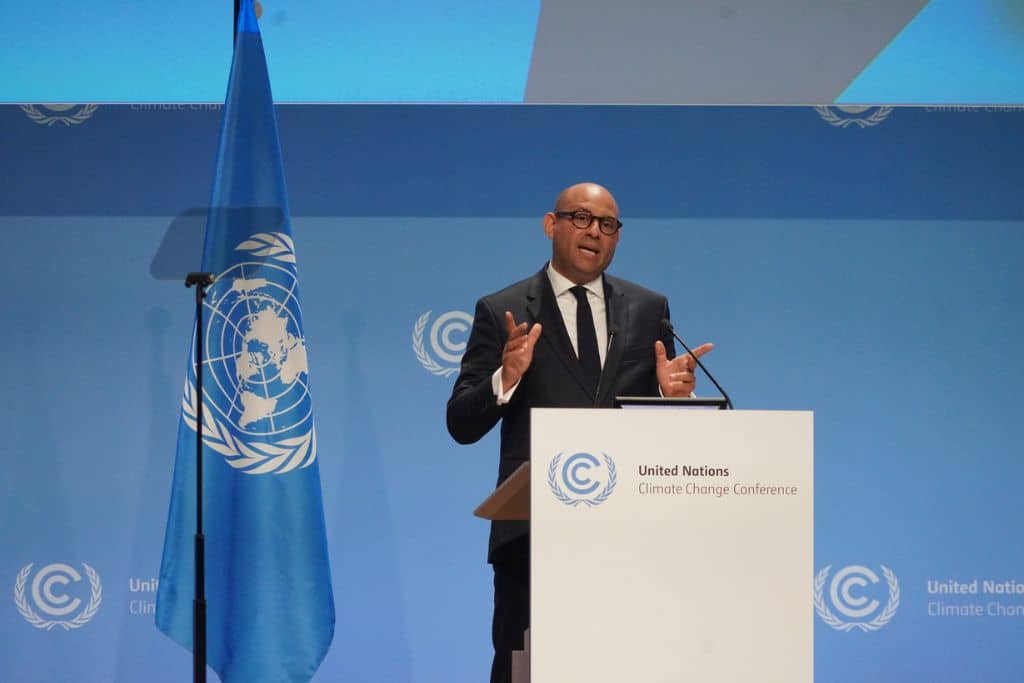
The Executive Secretary of the United Nations Climate Change, Mr. Simon Stiell, has urged nations to intensify actions to reduce emissions and strengthen resilience as the world faces mounting climate challenges.
Speaking at the opening of the 30th United Nations Climate Change Conference (COP30) in Belém, Brazil, on November 10, 2025, Stiell stressed that achieving the 1.5°C temperature goal requires faster and more coordinated efforts.
He noted that while global emissions are beginning to bend downward thanks to laws, innovation, and market responses, the pace remains insufficient to avert dangerous climate consequences.
“The science is clear: we can and must bring temperatures back down to 1.5°C after any temporary overshoot. Lamenting is not a strategy. We need solutions,” Stiell said.
He likened global climate cooperation to the Amazon River system, emphasizing that just as the river is powered by many tributaries, climate progress must flow from collective international action.
Stiell cautioned against waiting for delayed Nationally Determined Contributions (NDCs), warning that climate disasters are already eroding national economies, destroying harvests, and displacing millions.
He urged countries to act decisively, highlighting that renewable energy sources such as solar and wind are now the cheapest forms of power in 90 percent of the world and have surpassed coal as the leading energy source globally.
According to him, investments in clean energy and sustainable infrastructure are expected to reach record levels by the end of 2025, with renewable investments now outpacing fossil fuels two to one.
Stiell revealed that the COP30 conference would prioritize strategies to triple renewable capacity, double energy efficiency, and advance the transition away from fossil fuels in a fair and inclusive manner.
He reminded developed nations of their commitment to deliver at least $300 billion in climate finance and to operationalize the “Baku to Belém Roadmap” aimed at mobilizing $1.3 trillion for climate action.
“Every gigawatt of clean power will reduce pollution and create jobs. Every measure to build resilience will save lives and protect communities,” Stiell said.
He urged nations to transform ambition into measurable action, asserting that global cooperation and technological innovation are key to securing a livable planet for future generations.
