

By abdullahi Lukman
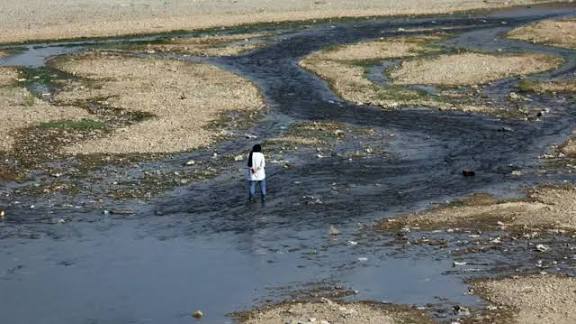
Tehran is experiencing one of its worst droughts in history, with rainfall at record lows and reservoirs nearly empty, prompting urgent government appeals for water conservation.
Officials warn that if conditions do not improve soon, Iran’s capital could face water rationing — or even evacuation.
President Masoud Pezeshkian said on Monday that rationing may not be enough to prevent disaster if rainfall does not resume soon.
“If rationing doesn’t work, we may have to evacuate Tehran,” he warned, sparking public criticism and debate across Iranian media.
Former Tehran mayor Gholamhossein Karbaschi dismissed the idea as “a joke,” insisting that evacuation “makes no sense at all.”
Meteorological officials report no rain forecast for at least the next 10 days, while residents in the city are already struggling.
Many are resorting to buying water tankers or bottled water to meet basic needs. Videos circulating online show households without running water for hours.
Tehran’s main reservoirs are critically low.
The Latian Dam currently holds less than 10 percent of its capacity, while the Karaj Dam — which supplies both Tehran and Alborz provinces — has dropped to only 8 percent, most of it “dead water” that cannot be used.
Energy Minister Abbas Ali Abadi warned that water supplies could be reduced to zero on some nights if the situation worsens.
He added that overconsumption penalties would be enforced and partly blamed outdated infrastructure and recent war damage for worsening the shortage.
Beyond Tehran, the crisis is spreading. Dams in provinces including West and East Azerbaijan, Markazi, and Khorasan Razavi are at single-digit capacity.
In Mashhad, Iran’s second-largest city, officials report less than 3 percent of usable water remaining in the city’s four main dams.
Experts say the crisis, decades in the making, stems from chronic mismanagement, overuse, and accelerating climate change.
Despite repeated warnings — including from Supreme Leader Ayatollah Ali Khamenei — little progress has been made.
Now, with more than 16 million residents in Tehran, Karaj, and Mashhad facing the risk of dry taps, Iran is confronting what could become its most severe water emergency in modern history.
