
Food security: Ghana releases 25,000 bags of fertiliser to boost minor season crop production

By Faridat Salifu
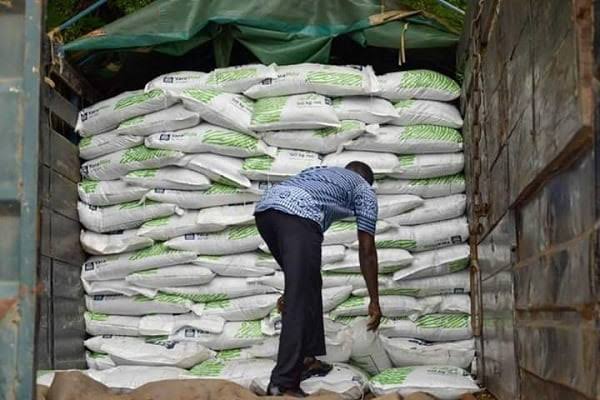
Ghana’s Ministry of Food and Agriculture (MoFA) has released 25,000 bags of fertiliser to support minor season crop production across the country, in a renewed effort to strengthen food security and promote institutional farming.
The intervention targets over 400 schools participating in the government’s Feed Ghana Programme, aimed at improving yields, encouraging youth participation in agriculture, and ensuring sustainable food supply to educational institutions.
Speaking during the flag-off in Accra, sector officials said the fertiliser distribution is part of a broader strategy to sustain productivity despite unpredictable rainfall patterns that often affect minor season farming.
According to MoFA, the initiative is expected to enhance the output of maize, rice, and vegetable farmers while cushioning smallholders against input shortages and rising production costs.
“The Ministry is committed to ensuring that every region benefits from this initiative,” an official said. “We are not only supporting farmers but also promoting school-based agriculture to build a generation that understands and values food production.”
Under the current arrangement, the fertiliser will be distributed to beneficiary schools and farmer cooperatives through the National Buffer Stock Company (NAFCO) and the regional agricultural directorates.
Officials noted that the government is working to ensure timely delivery to farmers to prevent delays that could affect planting schedules during the minor season.
The programme forms part of Ghana’s efforts to promote self-sufficiency in food production and align with the government’s broader agricultural transformation agenda, which prioritises input access, extension services, and market linkages for smallholder farmers.
MoFA said the gesture also reinforces its commitment to sustainable farming practices and the adoption of climate-smart agriculture to build resilience against changing weather patterns.
The ministry called on local assemblies, traditional leaders, and school authorities to support the implementation process, ensure transparency in distribution, and encourage best agronomic practices to maximise yield.
“The success of this initiative depends on the cooperation of all stakeholders,” the statement added. “We are determined to make agriculture the backbone of our economy again, starting from our schools and communities.”
