
Zamfara, Rivers, Ogun fail climate governance rating as Lagos, Katsina, Kaduna emerge top

By Faridat Salifu
Zamfara, Rivers, and Ogun States have been ranked as the lowest-performing states in the 2025 Subnational Climate Governance Performance Rating and Ranking (SCGPR 2.0), unveiled in Abuja during the official presentation of the Subnational Climate Governance Performance Rating and Ranking of Nigeria’s 36 States.
The rating, conducted annually across all 36 states, assessed progress in five key areas: climate change administration and institutional framework, policies and action plans, budgeting and finance, project implementation and reporting, and online visibility for climate communication.
It aims to promote transparency, peer learning, and accountability in climate action among subnational governments.
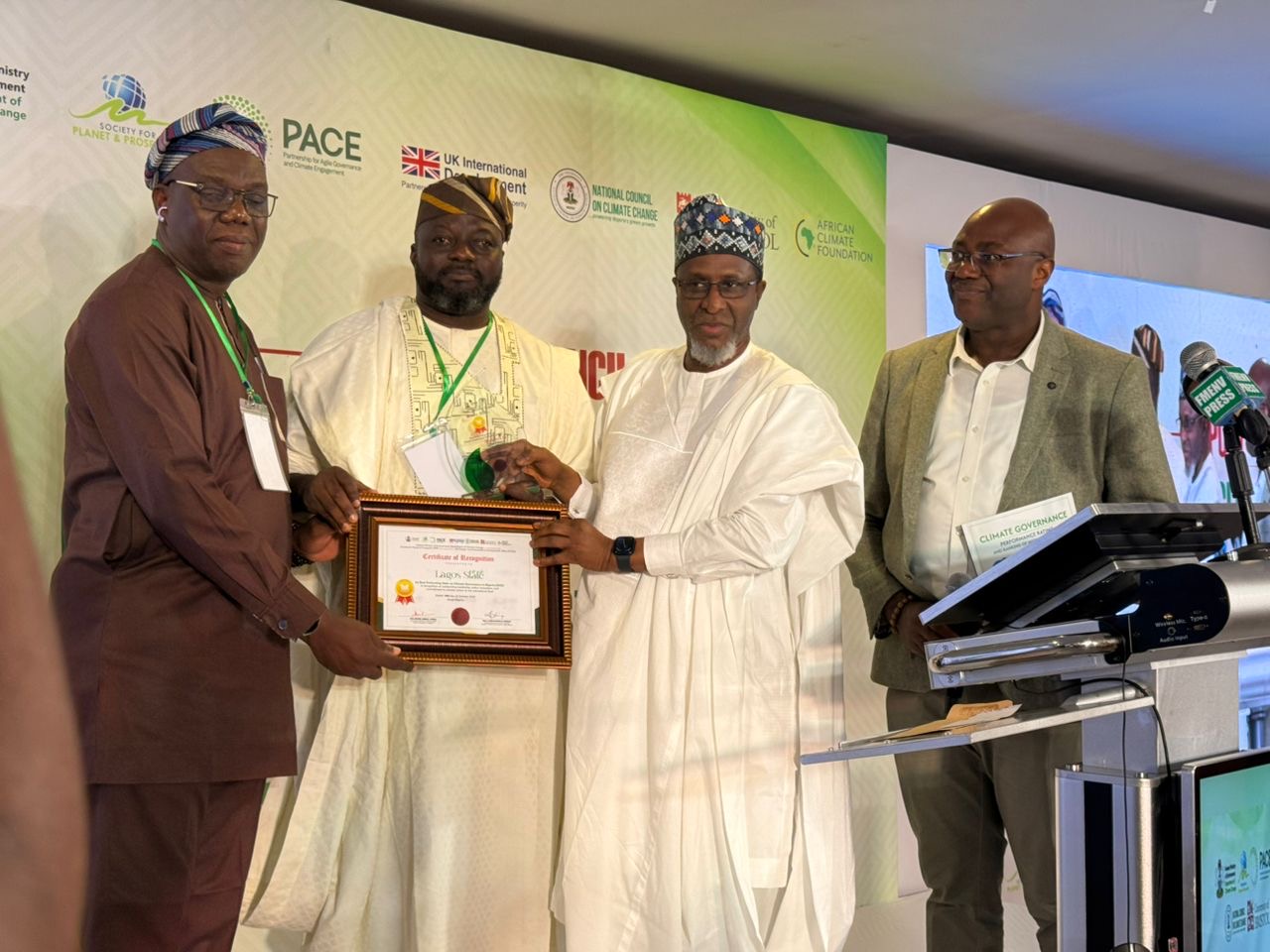
Lagos, Katsina, Kaduna, Kano, and Enugu States emerged as the overall top five performers for 2025. Lagos State retained its leading position with 315 points and an Outstanding rating, marking the second consecutive year it has topped the national climate performance chart. Katsina followed closely with 310 points, while Kaduna secured third place with 300 points.
Kano and Enugu completed the top five with 280 and 270 points, respectively, both earning High ratings and recognition for consistency and innovation in subnational climate governance.
The report highlighted that these states demonstrated strong political commitment to climate action, institutionalized climate policies, and implemented measurable subnational climate projects.
They were also commended for transparent budgeting and reporting mechanisms aligned with Nigeria’s national climate goals.
In contrast, Zamfara, Rivers, and Ogun ranked lowest with 70, 90, and 120 points, respectively, placing them in the Low category.
The report attributed their poor performance to the absence of functional climate governance structures, limited institutional coordination, and weak public communication frameworks.
Other states that scored relatively higher but still fell below the top-performing threshold include Osun (265 points), Oyo (260), Benue (250), Borno (240), and Cross River (240), all of which made the top ten with High performance ratings.
The middle-performing category, rated Good, featured Sokoto (225), Delta (225), Bauchi (220), Kebbi (220), Ebonyi (205), and Kwara (205) states that showed steady but moderate progress in strengthening their climate frameworks.
The Average category included 13 states, among them Anambra, Edo, Niger, Gombe, Yobe, Nasarawa, Imo, Bayelsa, Ondo, Taraba, Ekiti, Abia, and Akwa Ibom, which recorded scores ranging between 155 and 190 points.
The report noted that while these states have made some progress, most still lack the institutional depth required to implement and sustain long-term climate actions.
The comparative analysis between the 2024 and 2025 rankings revealed that while Lagos, Katsina, and Kano improved their scores, 19 states recorded declines due to poor data reporting, weak coordination, and lack of follow-through on previously identified action points.
The SCGPR 2.0, also known as the States’ Climate Scorecard, is designed to strengthen Nigeria’s climate governance architecture by benchmarking state-level performance, identifying best practices, and inspiring inter-state collaboration on climate solutions.
Through this framework, states are encouraged to institutionalize climate offices, integrate climate change into development planning, and prioritize evidence-based budgeting to accelerate Nigeria’s transition toward low-carbon, climate-resilient development.
