

By Abbas Nazil
The Lagos State Government has declared that all project developers must now undergo the Environmental Impact Assessment (EIA) process before beginning implementation, reinforcing its commitment to public safety, health, and sustainable development.
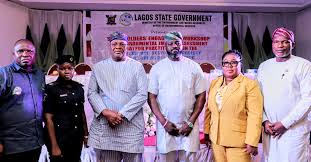
Special Adviser to the Governor on Environment, Olakunle Rotimi-Akodu, announced the directive during a stakeholder workshop held at Watercress Hotel, Lagos, where professionals in real estate and environmental services gathered to discuss the importance of mainstreaming sustainability into developmental projects.
Rotimi-Akodu explained that the new measure was necessary to bridge knowledge gaps on environmental impact issues and ensure developers consider sustainability from the planning stage.
He stressed that compliance is now compulsory and warned that the state government will strictly enforce the policy in the interest of safeguarding both people and the environment.
The special adviser highlighted Lagos’ unique position as Nigeria’s foremost investment hub, with its population of over 22 million, modern infrastructure, and attractive business policies.
However, he warned that the pressures of rapid industrialization, new settlements, and coastal reclamation bring serious risks, such as pollution and irreversible environmental degradation if left unmanaged.
He explained that the adoption of Environmental Impact Assessments by the Ministry of the Environment and Water Resources was aimed at mitigating such risks while promoting sustainable growth.
According to him, the EIA process evaluates the likely impacts of projects on the environment, health, and socio-economic activities while proposing measures to reduce or prevent negative outcomes.
Rotimi-Akodu emphasized that protecting the environment is a collective responsibility and urged developers and other stakeholders to see compliance not just as regulation but as a shared duty to secure a resilient and liveable Lagos for all residents.
Supporting this position, the Permanent Secretary of the Office of Environmental Services, Dr. Omobolaji Gaji, described the workshop as timely given Lagos’ ongoing development projects.
He noted that EIAs are globally recognized as an essential safeguard, ensuring that potential impacts are identified early and that mitigation strategies are built into projects.
Gaji reiterated Lagos State’s commitment to improving compliance and stakeholder participation in the EIA process, in line with its T.H.E.M.E.S-PLUS Agenda.
He cautioned that failure to address environmental impacts could further endanger Lagos’ fragile ecosystems, putting both public health and safety at risk.
Dr. Omowunmi Olatunji, Vice President of the Association of Accredited Environmental Consultants of Nigeria, stressed that EIAs not only provide long-term environmental benefits but also strengthen community involvement by ensuring that host communities are fully informed and consulted on projects.
She called on stakeholders to sensitize others about the importance of EIAs, stating that compliance goes beyond regulation, as it guarantees long-term sustainability.
Kolawole Mabawonku, a manager at Craneburg Construction Company, added that EIA compliance benefits both companies and government.
He said that by adhering to the process, businesses can secure faster government approvals, avoid regulatory bottlenecks, and protect the environment while enhancing their operations.
