
Tuesday, September 15, 2026
Naturenews.africa
Advertisement
  • Home
  • Environment
    • Ecology
    • Climate
    • Desertification 
    • Flooding
    • Erosion
    • Oil spillage
    • Ozone layer
  • Sustainability
    • Energy
    • Green House
    • Wildlife
    • Maritime
    • Tourism
  • Agriculture
  • Advisory Board
    • Emir Muhammad Hamim Nuhu Sanusi CFR
    • Prof. Abdoulaye Bathily
    • Mr. Nnimmo Bassey
    • Prof. Mark Mwandosya
    • Ms. Hawe Hamman Bouba
    • Professor Salah Arafa
    • Mr. Desmond Majekodunmi
    • Ms. Ikal Angelei
    • Professor Jimmy Adegoke
  • UN Days
  • Fact Check
  • Donate
  • Africa
    • Central Africa
    • East Africa
    • North Africa
    • Southern Africa
    • West Africa
  • More
    • About Us
    • Advisory Board
    • Contact Us
    • Terms of Use
    • Donation
Naturenews.africa
  • Home
  • Environment
    • Ecology
    • Climate
    • Desertification 
    • Flooding
    • Erosion
    • Oil spillage
    • Ozone layer
  • Sustainability
    • Energy
    • Green House
    • Wildlife
    • Maritime
    • Tourism
  • Agriculture
  • Advisory Board
    • Emir Muhammad Hamim Nuhu Sanusi CFR
    • Prof. Abdoulaye Bathily
    • Mr. Nnimmo Bassey
    • Prof. Mark Mwandosya
    • Ms. Hawe Hamman Bouba
    • Professor Salah Arafa
    • Mr. Desmond Majekodunmi
    • Ms. Ikal Angelei
    • Professor Jimmy Adegoke
  • UN Days
  • Fact Check
  • Donate
  • Africa
    • Central Africa
    • East Africa
    • North Africa
    • Southern Africa
    • West Africa
  • More
    • About Us
    • Advisory Board
    • Contact Us
    • Terms of Use
    • Donation
No Result
View All Result
Naturenews.africa
No Result
View All Result
Home Agriculture

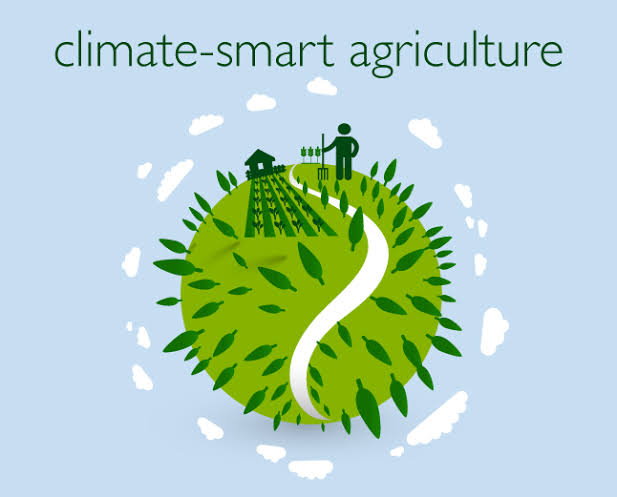
AfDB urges Nigeria to adopt climate-smart agric for climate-resilient economy

by Hauwa Ali
March 31, 2023
in Agriculture, Big Story, Climate change , News
Reading Time: 3 mins read
0
Climate change: Environmentalist tasks farmers on adoption of climate-smart agricultural techniques
Share on FacebookShare on Twitter

The African Development Bank (AfDB) in its Country Focus Report 2022, has urged Nigeria to build a climate-resilient economy by adopting climate-smart agricultural practices.

The recently published report was titled: “Supporting Climate Resilience and a Just Energy Transition.”

It listed some practices to include low-cost but effective technologies such as water harvesting, small-scale irrigation techniques, land and water conservation, and management strategies.

The report said minimum or zero tillage agriculture with high net returns to farmers was part of the practice.

According to the report, the African Economic Outlook 2022 estimates of the Climate Resilience Index, CRI, show that between 2010 and 2019, Africa is the least climate-resilient region in the world.

“With the lowest median (28.6) and mean (34.6) CRI scores, well behind Europe and Central Asia, the regions most resilient to climate shocks.

“During the same period, Nigeria was moderately resilient as compared to other African countries, with a CRI score of 26.8.

“Nigeria suffers from multiple climate change effects, manifested through rising temperatures and periodic droughts and flooding though.

“But with implications for agricultural productivity, food security and electricity generation, the country has made some progress in reducing its vulnerability,” it said.

The report said between 2010 and 2019, Nigeria performed relatively better than other African countries, falling into the category of low vulnerability to climate change and high readiness to respond to climate shocks.

It said Nigeria’s climate vulnerability and readiness indices were estimated at 50.3 and 30.6 respectively, among countries with low vulnerability high readiness.

The report said that at the country level, climate change effects remained a major source of policy concern, given Nigeria’s dependence on traditional agriculture and fossil fuel energy sources.

“The country’s high poverty and dependence on rain fed agriculture makes adaptation efforts to climate change effects more pressing as the country strives to achieve sustainable development goals for the benefit of poor households.

“Therefore, given the above factors, Nigeria must build climate resilience. Building climate resilience involves synergies with considerable mitigation co-benefits.

“Like most African countries, Nigeria contributes marginally to global warming, yet the country continues to bear a disproportionately high burden of climate change effects.

According to the report, this is largely due to Nigeria’s economic structure, heavily dependent on climate-vulnerable production systems, fossil fuel energy resources and traditional agricultural practices.

It said the economic cost of climate change could be much higher in the coming decades unless strong adaptation measures were judiciously implemented.

“This will threaten Nigeria’s achievement of sustainable development goals (SDGs) and the country’s efforts toward poverty reduction.”

“The climate change impact on agriculture, although this varies considerably by agro-ecological zone and crop type, is projected to be substantial.

“Under a business-as-usual scenario of the updated Nationally and Determined Contributions (NDCs), agricultural productivity could decline by between 10 per cent and 25 per cent by 2080 due to climate change.

“In some parts of the north, the decline in yield in rainfed agriculture can be as much as 50 per cent. This will in turn impact Gross Domestic Product (GDP), reducing it by as much as 4.5 per cent by 2050,” it said.

It said in spite significant spatial variability, the projected decline in yield was more pronounced in the northern part than elsewhere in the country and was relatively high for all crops.

However, the report said there was a broad consensus that rice appears more prone with yields falling as much as seven per cent in the short term (2006–2035) to 25 per cent in the long term (2050).

“Projected increases in annual maximum temperature of 3oC to 4oC from 2050 to 2070 can further impact agricultural productivity, induce water stress and reduction in the coverage of grazing pasture.

“This will lead to increased incidences of animal diseases and lower livestock production.

“Climate-induced water stress, land and forest degradation have affected soil moisture retention and weakened the ecosystem, further exacerbating the effects of climate change on agriculture,” it said.


Related Posts

Climate warnings must become local, collective, experts say

Climate warnings must become local, collective, experts say

September 13, 2026
UK plans £20m wildlife conservation centre in Nottinghamshire

UK plans £20m wildlife conservation centre in Nottinghamshire

September 13, 2026
Nepal seeks $4.78bn to rebuild after climate floods leave 1,400 dead, 5,600 missing

Nepal seeks $4.78bn to rebuild after climate floods leave 1,400 dead, 5,600 missing

September 13, 2026
World Bank, IDB review climate targets amid US push to cut green finance

World Bank, IDB review climate targets amid US push to cut green finance

September 13, 2026

Today’s Weather

Abuja, Nigeria
Tuesday, September 15, 2026
Light rain shower
24 ° c
91%
10.1mh
25 c 21 c
Wed
24 c 21 c
Thu
  • Trending
  • Comments
  • Latest
$1bn forest funding: FG unveils 10-year plan  to restore 2m hectares,  create 1.5m green jobs

$1bn forest funding: FG unveils 10-year plan to restore 2m hectares, create 1.5m green jobs

September 4, 2026
Daily Times@100, My 40 Years On The Beat

Daily Times@100, My 40 Years On The Beat

September 5, 2026
Human activities fueling environmental crisis across Nigeria —EDEN

Human activities fueling environmental crisis across Nigeria —EDEN

September 1, 2026
COP17 unlocks $1.3bn for Africa as expert urges Nigeria to compete with data

COP17 unlocks $1.3bn for Africa as expert urges Nigeria to compete with data

August 29, 2026
Ex-MD of Nigeria’s Daily Times Unveils Environment Newspaper, NatureNews

Ex-MD of Nigeria’s Daily Times Unveils Environment Newspaper, NatureNews

4
Sports Minister Dare to tee-off Liz-Ulumaranma inaugural golf tourney

Sports Minister Dare to tee-off Liz-Ulumaranma inaugural golf tourney

1
PwC Identifies Poor Infrastructure as Major Barrier to Agricultural Trade in Nigeria

PwC Identifies Poor Infrastructure as Major Barrier to Agricultural Trade in Nigeria

1

FAO Says 9.8 Million Residents across 16 States, FCT are Hungry

1
Chinwe Obuaku-Igwe: Championing people-centred climate action

Chinwe Obuaku-Igwe: Championing people-centred climate action

September 14, 2026
World Cleanup Day: Nigeria’s food waste problem starts long before the dumpsite

World Cleanup Day: Nigeria’s food waste problem starts long before the dumpsite

September 14, 2026
Abuja city with cattle  grazing unbated

Lessons From The Wuse Zone 3 Building Collapse

September 13, 2026
Wisdom Gathering: Rethinking climate change, food systems solutions

Wisdom Gathering: Rethinking climate change, food systems solutions

September 13, 2026
Show Transparency Report
Naturenews.africa

© 2026 Nature News

  • Home
  • Contact Us
  • Privacy & Policy
  • Donation

No Result
View All Result
  • Home
  • Environment
    • Ecology
    • Climate
    • Desertification 
    • Flooding
    • Erosion
    • Oil spillage
    • Ozone layer
  • Sustainability
    • Energy
    • Green House
    • Wildlife
    • Maritime
    • Tourism
  • Agriculture
  • Advisory Board
    • Emir Muhammad Hamim Nuhu Sanusi CFR
    • Prof. Abdoulaye Bathily
    • Mr. Nnimmo Bassey
    • Prof. Mark Mwandosya
    • Ms. Hawe Hamman Bouba
    • Professor Salah Arafa
    • Mr. Desmond Majekodunmi
    • Ms. Ikal Angelei
    • Professor Jimmy Adegoke
  • UN Days
  • Fact Check
  • Donate
  • Africa
    • Central Africa
    • East Africa
    • North Africa
    • Southern Africa
    • West Africa
  • More
    • About Us
    • Advisory Board
    • Contact Us
    • Terms of Use
    • Donation

© 2026 Nature News

This website uses cookies. By continuing to use this website you are giving consent to cookies being used. Visit our Privacy and Cookie Policy.